Phone: (808) 585-3300 Fax: (808) 545-5063
Roman Catholic Church in the state of hawaii
Diocese of Honolulu
E Hiki Mai Kou Aupuni
News & Events
Help me find...
- Home
- >
- News & Events
- >
- News Articles
- >
- 2026
- >
- October
- >
- 10/5 What It Means to Be Human
- >
News Articles
One ʻOhana: What It Means to Be Human
October 5, 2026
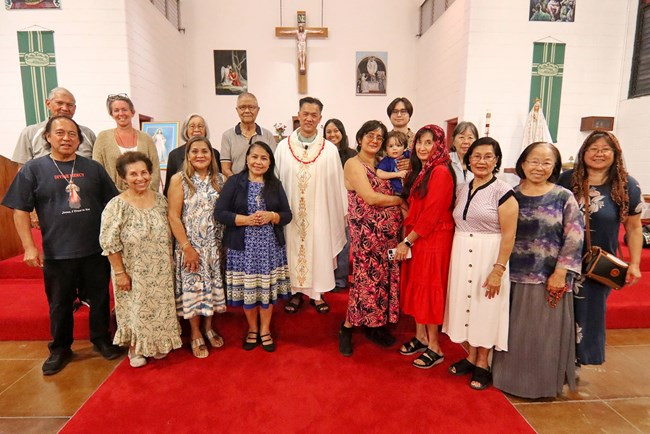 (Photo courtesy of Dann Ebina)
From the Office for Social Ministry
“What does it mean to be human?”
— Pope Leo XIV, Address to UNESCO, Paris, September 25, 2026
Before and after a storm, a simple question can mean everything: Are you okay? We may call our parents or check on a neighbor. We wonder whether someone living alone has food, electricity or a safe place to sleep. Even while carrying worries of our own, we reach out for one another. As we face storms in the skies and in our personal lives, Pope Leo XIV’s words speak directly to the heart. In his recent address in France to the United Nations Organization for Education, Science and Culture-UNESCO, he asked a simple yet profound question: What does it mean to be human?
Our Holy Father began his UNESCO speech with something we all share: every one of us was once a child. Someone had to feed us, hold us and help us find our way. “From the outset, our humanity is a gift and a trial, a promise and a responsibility.” We may grow more independent, but we never outgrow our need for love. Illness, loss or unexpected hardship can remind us how much it matters to have someone beside us. Sometimes we are the people who offer help. Sometimes we are the ones who need it.
Here in Hawaiʻi, our island cultures and shared value of ʻohana help us understand that connection. We belong to one another. As a Church, we recognize ourselves as brothers and sisters in Christ, children of the same Father. That relationship asks something of us: to notice, to listen and to care. It can begin with learning someone’s name and pronouncing it the way they want to hear it. Staying a little longer after Mass to talk with a person sitting alone. Asking a child what matters to them—and giving them time to answer. Helping a kūpuna with a ride home from the grocery store.
Through language, art, music and dance, we give expression to our humanity and share what matters to us. Pope Leo reminds us how people from different nations heard the good news in their own languages at Pentecost. Today, we can open our minds and hearts to another person’s experience, looking beyond what is immediately visible to understand the life they carry. A culture of care grows through these efforts to listen, understand and respond with compassion: “Communion in no way suppresses diversity. Rather, it enables diversity to flourish in the harmony of voices and faces.”
Making room also means listening when someone’s experience differs from our own. What might we learn if we paused before answering? Whose story have we yet to hear? And in this digital age when information moves quickly, is it really accurate? The Pope points out “Communication has become much faster, but not necessarily more truthful. Information is abundant, but it is not synonymous with wisdom.” We can send a message in seconds. Understanding someone takes longer. It asks us to pay attention to the worry beneath their words, the question they are hesitant to ask or the silence that may be hiding loneliness.
In an age of artificial intelligence, these human encounters deserve our care. Technology can help us find information and finish a task. When someone is grieving, frightened or struggling, our presence matters too. “Our dignity is not destroyed by illness or suffering, nor is it dependent upon our abilities. Rather, it calls for loving care at every stage of life.” Pope Leo asks us to look closely at how we treat the most vulnerable. That invitation reaches into everyday parish life. Can a person with disabilities participate fully? Does a newcomer have someone to sit with? Does a family facing hardship know where to turn without feeling ashamed?
Storm recovery brings these questions to our doorsteps. Behind every damaged home is someone trying to decide what comes next. Behind every request for assistance is a person with a story, a family and hopes for the future. As the Body of Christ, we can help carry that burden. We can offer a meal, lend our hands, contribute to relief efforts or keep checking in after the immediate crisis has passed. Recovery takes time. People need to know they have not been forgotten. This is aloha lived through compassionate action.
In his UNESCO address Pope Leo reminds us “Every child born into this world brings new hope,” We nurture that hope whenever we help someone feel safe, valued and welcome. We nurture it when we seek truth, protect creation and choose to keep talking across our differences. The Pope calls all to “foster a more lively, profound and effective consciousness of our membership in the one human family.”
What does it mean to be human? Perhaps answer begins when we recognize ourselves in another person’s need—and respond with love. When we allow someone to care for us, too. When being more compassionate, more truthful and more present becomes part of how we live our faith. We are many parts, but all one body. We are one ʻohana. And sometimes, the next step is as simple as picking up the phone and asking: Are you okay?
It’s worth reading Pope Leo XIV’s full UNESCO address. To support the Hawaiʻi Storm Relief & Recovery Fund, please visit the Hawaiʻi Catholic Community Foundation. Mahalo.
