Phone: (808) 585-3300 Fax: (808) 545-5063

Roman Catholic Church in the state of hawaii
Diocese of Honolulu
Witness to Jesus
News & Events

Help me find...
- Home
- >
- News & Events
- >
- News Articles
- >
- 2026
- >
- March
- >
- 3/8 Homily 3rd Sunday of Lent
- >
News Articles
Bishop's Homily for the Third Sunday of Lent
March 8, 2026
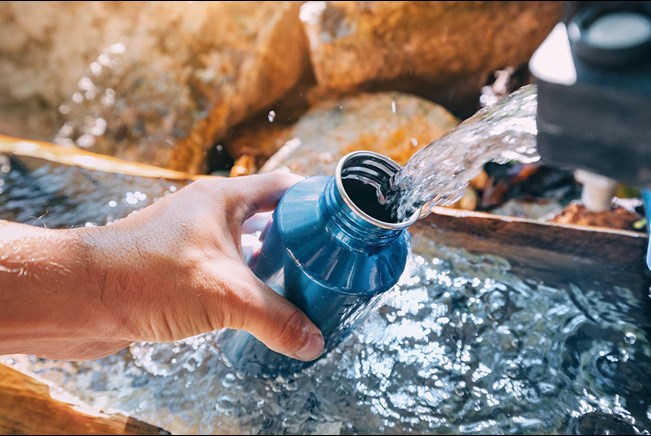 (frantic00 / Shutterstock.com)
Homily of the Most Reverend Larry Silva, Bishop of Honolulu
[St. Ann Church, Kaneohe]
It is so easy for us to get water. We turn on a tap and it comes out hot or cold. We have it delivered to our houses in bottles. It is hardly imaginable to be without access to water so conveniently. Yet not too many years ago -- and even today in many places in the world -- obtaining water was no easy task. You had to take your buckets, walk out to the town well, fill your buckets with water, and carry the water home, hoping you did not spill too much on the way. The drudgery of getting it may not seem worth it, until you realize you simply cannot live without it.
Jesus was thirsty after a long journey. He asked someone he was not even supposed to talk to for a drink. We are not told whether he ever got his drink of water. What is clear is that he got what he was really thirsting for, the soul of this woman.
She was thirsty, too; thirsty for love! The fact that she was at the well at noon is significant. Women – who were the ones whose job it was to fetch water for the household – were smart enough to go to the well earlier in the day, when it was not so hot. But this woman went to the well at high noon, when the men who were tending their flocks would normally be there. She was not just looking for water, but for yet another man who could satisfy her thirst for love. But when she met Jesus, she encountered a love she had never encountered before, a love that knew her better than she knew herself, a love that, while not casting a blind eye on her misdeeds, did not condemn her, but invited her to drink deeply of his mercy.
How could it be so easy? It was like turning on a tap, and there was the water gushing out. It was like striking a dry rock in a desert and having a torrent of water pour forth. She had to do so little, but she received so much.
All of us are that Samaritan woman. Perhaps we assume that Jesus is not interested in me. I’m only a Samaritan, or only a housewife, or only a janitor, and certainly a sinner. Yet the dryness we sometimes feel about what we have not accomplished, what we have not become, is flooded over with Jesus’ merciful love – if we let him speak to us, if we do not run away from him.
Perhaps we are tired and weary from a humdrum, dry existence – going to work, sitting hours on end in traffic, cleaning the same house and yard again, preparing dinner again, day in and day out. All this can take so much out of us, unless we draw into all these things the never-ending love of God in which we share. With the living water that is Christ, going to work can be seen not as drudgery, but as a way of working with God to create a more beautiful world. Commuting can give us an opportunity to reflect on those for whom we commute, to pray for those with whom we commute, with all their joys and struggles, their boredoms and their celebrations. The things that made us so thirsty can be transformed into things that refresh us, if we first understand how much we are loved and are called to share that love with others.
Today the Elect, those who are to be soaked in the saving and life-giving waters of Baptism at the Easter Vigil, celebrate the First Scrutiny. They stand publicly before the Church to admit they are thirsty, to scrutinize themselves to see where they are dry and crusty and parched, so that there Christ can pour out his life-giving water. The well of living water they will approach to encounter this same Jew who changed the life of the Samaritan woman, is a well that has already been opened for us. We are called to remember, to sit with the Lord and let him speak to our hearts, so that no matter what routines or sufferings or thirsts we have, we will let him open us, and he will be that spring of life-giving water that brings us eternal life.
