Phone: (808) 585-3300 Fax: (808) 545-5063

Roman Catholic Church in the state of hawaii
Diocese of Honolulu
Witness to Jesus
News & Events

Help me find...
- Home
- >
- News & Events
- >
- News Articles
- >
- 2026
- >
- March
- >
- 3/23 Seeing Christ in the Migrant
- >
News Articles
CRS Rice Bowl - Seeing Christ in the Migrant
March 23, 2026
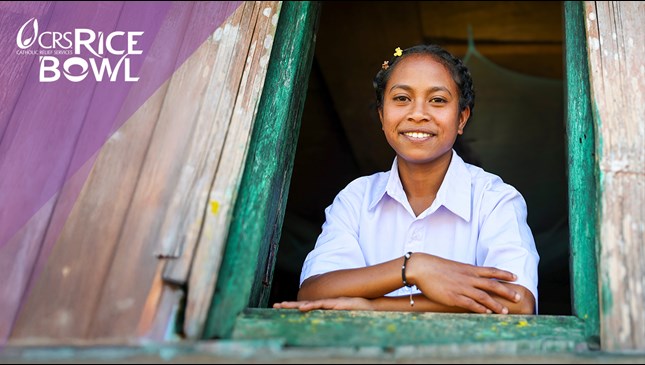 (Photo credit: CRS Rice Bowl social media)
From the Office for Social Ministry
“That is why God became flesh in Jesus, so that the clay of our humanity, shaped by the breath of his grace, might receive a new light, one capable of helping us to see ourselves, others and God in truth.”
Pope Leo XIV’s Angelus Message the Fourth Sunday in Lent 2026
During a recent Sunday of Lent, the scripture readings included the Gospel story of Jesus miraculously healing the man born blind. The words of the cured man, “I was blind, and now I see.” (repeated in the beloved hymn Amazing Grace) speak about transforming sight through the light of God’s grace. In his Sunday Angelus message, Pope Leo XIV reflected on this profound transformation. “While we were in darkness… God sent his Son as the light of the world to open the eyes of the blind and illuminate our lives.”
The Pope Leo proclaimed that Lent invites us to deepen our faith which “helps us to see things as Jesus himself sees them, with his own eyes: it is a participation in his way of seeing.” When encountering the blind man overlooked by others, Jesus does not ask if he deserves healing nor does Jesus question his status or past. Jesus simply sees the blind beggar and compassionately opens his eyes. The pope says Christ “the light of the world” opens eyes, so we can see more clearly our wounded sisters and brothers, and experience with them the healing grace of God.
On the same Fourth Sunday in Lent, Bishop Mark Seitz released his pastoral letter to the Diocese of El Paso, Texas, painfully addressing what many would rather not see: migrant families torn apart, parents and children suffering in detention, and lives lost in the process of deportation. The bishop clearly sees and calls these tragedies “grave moral evils.” Yet his message was not one of division, but of conscience. He affirms the importance of “law enforcement and community safety,” while insisting: “No system, no policy, no border can justify the loss of human dignity or the destruction of human life.”
Drawing on recent statements of Pope Leo, Bishop Seitz declared: “Policies, laws and borders must always be at the service of flourishing human dignity and genuine community security.” Bishop Seitz’s letter calls all to the same clarity of vision. The scripture story of salvation is one of migration—from Abraham to Jesus. To be Christian is to recognize ourselves in migrant persons. It is to understand that human movement is not a problem to be solved, but a reality to be accompanied—with compassionate justice. This does not dismiss the need for laws or borders. But the Bishop’s letter does draw a moral line: “When systems result in suffering, dehumanization, or death, they must be challenged as destructive of our shared humanity… When we take off our masks and encounter each other as neighbors, we can reclaim our common dignity.” His words echo the prophetic witness of El Salvador’s Archbishop St. Oscar Romero, martyred in March 1980: “No one is bound to obey an immoral order.”
In a recent visit to the Vatican, Pope Leo encouraged Bishop Seitz to continue “standing with migrants.” In response, the bishop has called his diocese to prayer, peaceful action, and visible solidarity—to walk in the light especially with those who cannot safely raise their own voices. It means supporting and participating in ministries that accompany migrants and refugees. It involves seeing their dignity, listening and sharing with them their stories and hopeful dreams.
One way of to do this in Lent is through the Catholic Relief Services Rice Bowl. Through CRS Rice Bowl, communities around the world receive the tools and knowledge they need to nourish their families and strengthen their futures. In the previously war torn Southeast Asian country of Timor-Leste, a young girl named Adriana sits with other students learning something simple—but life-changing. Through nutrition and health classes supported by CRS, Adriana and her classmates are discovering how the food they eat affects their bodies, their growth, and their future.
As she learns how the body works and why good nourishment matters, Adriana begins to imagine herself one day helping others stay healthy too. She now hopes to become a doctor—someone who can care for people in her community and help them live full and healthy lives. What begins as a simple lesson becomes something more. A lesson becomes a dream. And a dream can transform a community.
As we continue our Lenten journey, may we pray for the light of grace to truly see and stand with those who are most vulnerable. Pope Leo and Bishop Seitz remind us that we do not walk alone. We can turn to Mary, who carried the light of Christ into a darkened world. May she help us open our eyes. And as our eyes are opened, may we remember: we are called to live reflecting the light of our compassionate God, the most Amazing Grace of all. For more on the Lenten messages of Pope Leo, Bishop Seitz, and how to participate in the CRS Rice Bowl, please visit: www.officeforsocialministry.org. Mahalo.
