Phone: (808) 585-3300 Fax: (808) 545-5063

Roman Catholic Church in the state of hawaii
Diocese of Honolulu
Witness to Jesus
News & Events

Help me find...
- Home
- >
- News & Events
- >
- News Articles
- >
- 2026
- >
- March
- >
- 3/22 Homily 5th Sunday of Lent
- >
News Articles
Bishop's Homily for the Fifth Sunday of Lent
March 22, 2026
 (Andriy Baidak / Shutterstock.com)
Homily of the Most Reverend Larry Silva, Bishop of Honolulu
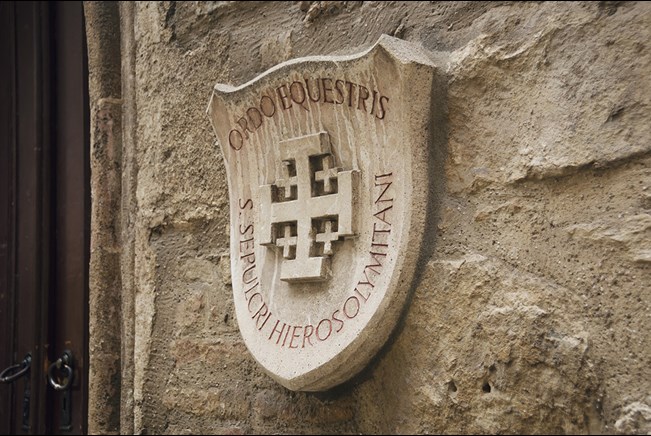
[St. Ann Church, Kaneohe (with the Order of the Holy Sepulchre of Jerusalem)]
Today we are happy to welcome the local members of the Equestrian Order of the Holy Sepulchre of Jerusalem! I am proud to be a member of this group myself. It is a centuries-old international Order, approved by the Popes, whose primary duty is to support the Christians and Christian shrines in the Holy Land, the land where God’s chosen people were led and where God’s only begotten Son, Jesus, lived his earthly life. There has always been a need for outside support, which is especially acute during this time of war, when many people who live there have lost their livelihoods. It is a very tourist-dependent economy, and for the last several years, very few tourists have felt safe enough to visit. The Order of the Holy Sepulchre supports hospitals and schools in the Holy Land, as well as the work of the local diocese there, the Patriarchate of Jerusalem. In a couple of weeks, all of us will be asked to participate in this support through the annual Good Friday collection for the Holy Land. Please remember these suffering brothers and sisters in the Holy Land on that day especially.
For an outsider, it may seem weird for an Order to be named after a tomb or sepulchre. But we know that Holy Sepulchre of Jerusalem was an extremely important place, because there the Lord Jesus was laid to rest after his crucifixion, and from there he rose from the dead, never to die again. It is because that tomb is empty that we are gathered here to encounter the Risen One, who just spoke to us in his Word, and who will be physically present in his Body and Blood, soul and divinity on this altar. That putrid and fearful sepulchre has become the centerpiece of the story of our salvation.
Today we hear of another tomb, the tomb of Lazarus, the dear friend of Jesus and the brother of his friends Martha and Mary. He would often stay at their house in Bethany when he went on his frequent pilgrimages to the Holy City of Jerusalem, since it was only about two miles from Jerusalem. Lazarus was deathly ill, and knowing of the healing powers of Jesus, his sisters sent word to Jesus about the illness, thinking he would be there immediately to heal Lazarus. Yet Jesus purposely decides to wait two more days before going to Bethany. He knew that he was about to perform a healing more dramatic than he had ever done before by raising Lazarus from the dead, even after his body was already decaying from being in the tomb for four days. With trust in his heavenly Father, he called Lazarus to come out of the tomb to live once again. Jesus emptied one tomb before his own became empty a short time later. This, of course, is significant for us, because Jesus also wants to call us out of our tombs, whatever they may be, so that he can untie us from the bonds of sin and let us go free.
Perhaps a marriage is in a tomb, looking well groomed and cared for by those who see it externally, but rotting away from selfishness, betrayal, or boredom. Perhaps someone’s tomb is an addiction that seems to lock one away from true life: addiction to drugs, alcohol, gossip, self-serving ideologies, or many other sins. For some, faith itself is in a tomb, covered over with the beauty of rituals and doctrines, but dead in its relationship to Jesus, the Savior. Some are locked away in a tomb of anger that God has not responded to their plight the way they thought he should have – as did Mary and Martha when they both went out to Jesus, shaking their fingers at him, saying, “Lord, if you had been here, my brother would never have died!”
But we reflect on this story of the raising of Lazarus, not only to marvel at what happened long ago and far away, but to nurture our faith in Jesus, who still weeps when we suffer and who still wants to call us out of our tombs and set us free. Sometimes this freedom we desire does not come as quickly as we want. Sometimes we have to wait a long time and work very hard to roll away the many stones we have placed between ourselves and the light that is Christ himself. The Lord does not always act at the snap of our fingers, because he knows that we may need to do some work ourselves or seek out some help for ourselves so that our tombs can finally be opened. But the same Jesus who, in his own time, called Lazarus out of his tomb, wants to do so for us. And, of course, he ultimately wants to call us out of death itself, so that we can live with him forever in the new and eternal Jerusalem.
