Phone: (808) 585-3300 Fax: (808) 545-5063

Roman Catholic Church in the state of hawaii
Diocese of Honolulu
E Hiki Mai Kou Aupuni
News & Events
Help me find...
- Home
- >
- News & Events
- >
- News Articles
- >
- 2026
- >
- April
- >
- 4/20 Even Just One of These Children
- >
News Articles
Even Just One of These Children
April 20, 2026
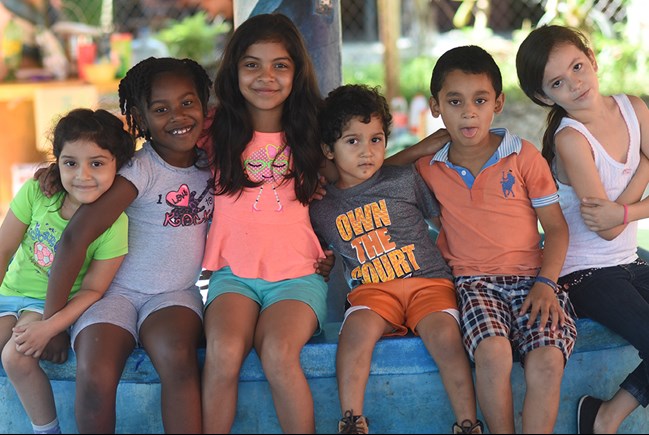 (Joseph Sorrentino / Shutterstock.com)
From the Office for Social Ministry
“Whoever welcomes one such child in my name welcomes me” (Mt 18:5).
In the bright light of the Easter season, when the Church proclaims that life has overcome death, we are invited to look more closely at where that new life is most fragile—and most revealing. This year, Pope Leo XIV has chosen an urgent theme for the 112th World Day of Migrants and Refugees: “Even just one of these children.” It is a simple phrase, but it carries a profound challenge. The current migration situation presents new challenges that seriously threaten the rights and dignity of the youngest among us and require urgent effective responses. This is not a matter of discussing numbers or percentages, because “even just one” has the highest value. If even one child is forgotten, displaced, or left unprotected, then something essential in our shared humanity—and in our discipleship—remains unfinished.
Across the world, the number of children affected by war, displacement and natural disasters continues to explode exponentially. Behind every statistic is a child with a name, a face and a story—often marked by fear, but also by resilience and hope. Pope Leo’s call is not abstract. It is deeply personal. It reminds us that to welcome a child is not simply an act of charity; it is an encounter with Christ himself.
In last year’s message for this same observance, Pope Leo described migrants and refugees as “missionaries of hope.” Their journeys reveal that faith and dignity can endure even in uncertainty. Seen in this light, migrant children are not only among the most vulnerable; they are also witnesses to the promise that God continues to walk with and in humanity on the move.
Recently, the bishops of Latin America and the Caribbean (CELAM) offered a reflection drawn from listening directly to migrant children. They described them as “the most excluded among the excluded,” yet also as “bearers of dreams and signs of the Kingdom of God. “This perspective gently shifts our understanding. Migrant children are not only in need—they also reveal something about God that we might otherwise overlook.
“Where the world builds walls,” the bishops remind us, “God continues to open paths.” In every migrant child, God renews his promise: “I am with you.” This is not only a message for those who suffer. It is also a call to those who follow Christ to become instruments of that promise in concrete and personal ways. Migrant children on the move suffer tremendous trauma and loss, yet in their quiet resilience they teach us that hopeful grace can take root even in the most marginal, seemingly hopeless places.
“Migration is a mirror reflecting God’s movement toward humanity,” the bishops write. That image invites us to see God always moving toward us—crossing distances, entering into our struggles, walking alongside us. In the same way, migrant children journey not only across borders, but into the heart of our faith. They invite us to see the world “from below,” where dignity is often obscured but never lost.
Today, we can see signs of this Gospel in action. During Lent, many parishes participated in Rice Bowl, reflecting on the stories of children around the world, including in the Americas, whose lives are shaped by both hardship and hope. We have witnessed hopeful migrant ministries flourishing in Montreal and El Paso accompanying migrant children not as problems to be solved, but as persons to be welcomed and celebrated—with compassionate presence and care, with nourishing meals and patient tutoring. There we discovered migrant families with autistic children sharing their musical talents, alongside refugee families sharing their culinary skills along with children games and dances with local food ministries.
Here at home, similar hopeful care takes root in our local communities. At the Co-Cathedral of St. Theresa, parish plays like The Pied Piper create spaces where children from many nations find joy and belonging. Many parishes collaborate with food banks to distribute vital supplies after floods or fires, and month for kūpuna which often help sustain households where grandparents are raising grandchildren. Something as simple as a parish Easter egg hunt for all children in the community have become moments of grace, where laughter replaces anxiety and belonging replaces isolation.
These efforts may seem small in the face of global challenges. But the Gospel never asks us to solve everything at once. It asks us to respond faithfully, beginning where we are: “even just one of these children.” As we continue through this Easter season and beyond, we are reminded that resurrection is not only something we celebrate—it is something we live. Each time we welcome a child, protect their dignity or accompany their journey, we participate in that new life. And perhaps, if we allow ourselves to look closely and truly listen, we will discover that these children are not only receiving our care—they are also leading us closer to the heart of God. For more information on the 2026 World Day of Migrants and Refugees, please visit the Vatican website, www.humandevelopment.va. Mahalo.
