Phone: (808) 585-3300 Fax: (808) 545-5063

Roman Catholic Church in the state of hawaii
Diocese of Honolulu
Witness to Jesus
News & Events
Help me find...
- Home
- >
- News & Events
- >
- News Articles
- >
- 2025
- >
- December
- >
- 12/29 Welcoming Emmanuel inHawaiʻi
- >
News Articles
Welcoming Emmanuel in Hawaiʻi
December 29, 2025
 (mojekadry / Shutterstock.com)
From the Office for Social Ministry
“When the fragility of others penetrates our hearts, when their pain shatters our rigid certainties, then peace has already begun.” Pope Leo XIV Christmas Day Homily 2025
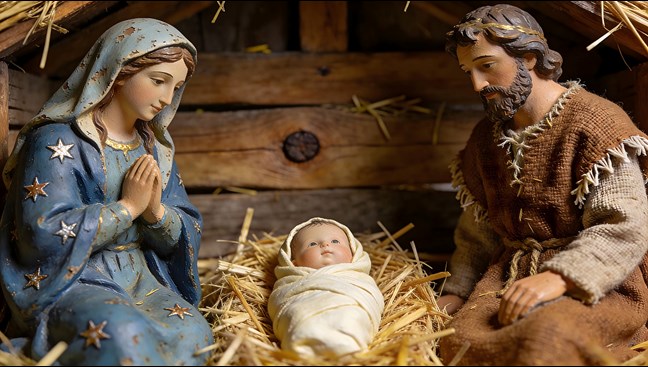
Reflecting upon that peaceful night of the very first Christmas, we often think of the humble stable where Jesus was born. We can picture the rough wood of the manger, animals breathing warmth into the cold air, and shepherds standing in awe at an invitation they never expected to receive. The Holy Family appears front and center—poor, displaced, fragile, and yet entrusted with the hope of the world. It is a scene so familiar that we risk overlooking how radical it truly is.
In his Christmas message this year, Pope Leo XIV invites the Church not to rush past the manger, but to linger there long enough to be changed by it. “God comes to us in the lowliness of a child...the Word became flesh. Human flesh asks for care; it pleads for welcome and recognition, it seeks hands capable of tenderness.” This is not sentimentality—it is revelation. The stable shows us who God is, and His loving missionary outreach to all.
It is interesting to note that the fragile Christmas story of the Holy Family begins with exclusion: “There was no room for them in the inn.” It continues with uncertainty, flight into Egypt, and life as refugees. From the start, Jesus knows what it means to be vulnerable. In his encyclical Dilexi Te (“I have loved you”), Pope Leo reflects on the Heart of Christ—a sacred heart shaped by the nearness of vulnerable intimacy. “To love as Christ loves is to allow ourselves to be touched by the suffering of others.” If the stable is the lens through which we see the Christmas Story, then we need to ask ourselves: Who is now being told that there is no room?How do parishes, policies, and personal choices either welcome or exclude others?
Here in Hawaiʻi, the question “where is there room?” takes on a particular urgency. We often see local families priced out of their communities. Young people leave because they cannot afford to stay. Elders live frantically on fixed incomes, choosing which necessities they can secure daily. Newcomers arrive seeking safety or opportunity, while long-time residents wonder if there will still be a place for them here in the future. So, we might ask: Are there “stables” today in Hawaiʻi where the vulnerable Christ is being welcomed?” Sometimes that “stable” may look like a parish hall opening its doors for food distribution or legal clinics. Sometimes it is where social ministry volunteers sit with someone who feels invisible. Sometimes it is in affordable housing advocacy, care for the houseless, accompaniment of migrant families, or pastoral presence in hospitals, prisons, and shelters. It is often in our parishes’ practical collaborations with community groups doing all the above, serving with the vulnerable, making room in our lives to encounter the fragile “Emmanuel, God with us.”
The Pope reminds us the whole Christmas season invites all to share the missionary message of the Incarnation. “Since the Word was made flesh humanity now speaks, crying out with God’s own desire to encounter us” with a message of peace.How fitting that the first day of the new year is the Solemnity of Mary, Queen of Peace. This feast reminds us that peace grows when we welcome God’s fragile presence and allow Him to shape our choices. Mother Mary’s peace is courageously active. In a time marked by war, polarization, and economic anxiety, Mary’s peaceful strength invites us to reflection and action: Where are we being called to become peacemakers—in our families, our neighborhoods, our Church? And what does it mean for peace to take flesh through reconciliation, hospitality, and care for the vulnerable? Joseph also offers a model for our time as a husband, parent, brother, and friend. He listens, trusts, and moves forward step by step—finding shelter, safeguarding his family, trusting God with the future. Then, on January 6, the feast of the Epiphany provides more missionary images of the Incarnation among the vulnerable. The three kings were foreigners from distant lands on a mission, bearing gifts of gold, frankincense, and myrrh, stewardship symbols of time, talent and treasure. Drawn by a light they did not yet fully understand, they crossed borders, risked danger, and knelt before a humble, vulnerable family. None of their valuable offerings could compare to gift of the loving light of God’s presence in the fragile Christ Child.
The Christ Child invites all to experience peace and love. The Newborn exudes a happiness in the joy of life, sharing a fragile smile of peaceful love with others. Love that’s freely given is love freely received, and peaceful loving can be experienced through our shared vulnerability as one Ohana. That is the Christmas Spirit. As we enter 2026, with preparations for our 2027 bicentennial celebration of Catholic missionaries’ arrival in Hawai’i, and the renovation of Our Lady of Peace Cathedral, may we widen our hearts by kneeling with the vulnerable in the stables long enough to be changed. And may we carry into the new year the question that God whispers to each of us: How will we make room for fragile “Emmauel, God with us” and help bring peace to all? Mahalo.
